
Radio History from
Telstar 1 Satellite Demonstration: A Live Event
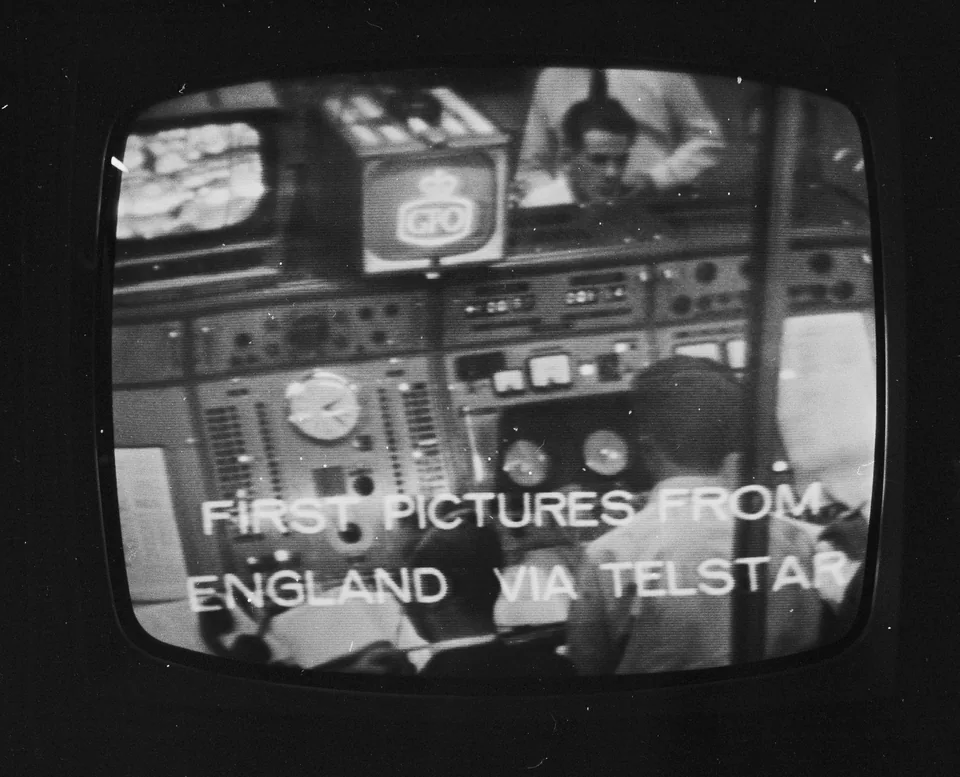
Telstar 1 carried live public television programs across the Atlantic on July 23, 1962, as American networks and the European Broadcasting Union exchanged broadcasts through the experimental satellite. The programs demonstrated that an orbiting radio relay could deliver live pictures between continents to audiences at home.
The exchange followed the spacecraft’s July 10 launch and earlier transmission tests. Television made the experiment widely visible, but its purpose extended to telephone calls, data and facsimile transmission—services that could expand international communications capacity.
Telstar 1 Relays Signals Between Continents
Bell Laboratories designed and built Telstar 1, AT&T financed it, and NASA launched it from Cape Canaveral. The spacecraft received signals from a ground station, amplified them and retransmitted them toward receiving stations on Earth.
Telstar 1 used 3,600 solar cells for power and a traveling-wave tube to amplify the relayed radio signal. Its communications equipment supported either television or multiple telephone channels. The mission also tested how satellite electronics performed after launch and during exposure to the space environment.
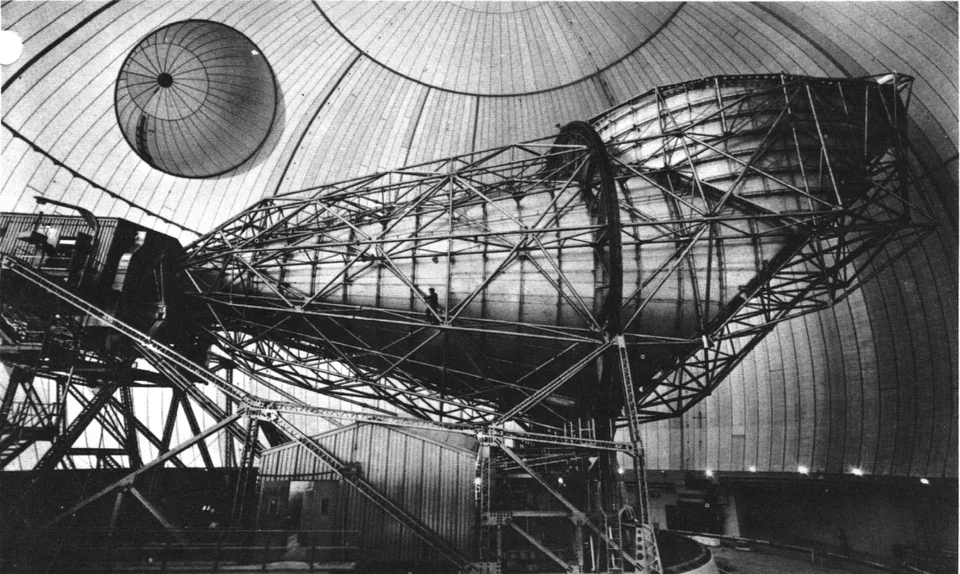
Ground stations supplied the tracking antennas and receiving equipment needed for the link. Facilities at Andover, Maine, Pleumeur-Bodou in France and Goonhilly in Britain participated in the experiments. NASA describes Andover’s horn-reflector antenna as seven stories high and weighing 340 tons.
Orbital Passes Limit Broadcast Time
Telstar 1 completed an orbit in about two and a half hours. A useful transatlantic path lasted roughly twenty minutes, while ground stations on both sides of the ocean could communicate with the moving spacecraft. Antennas had to track its passage, and broadcasts had to fit the available contact window.
The test program carried more than 400 transmissions during its first four months, according to a 1968 account in Proceedings. Those included television demonstrations, telephone calls, data and facsimile traffic. The experiments tested a complete communications system: Spacecraft, ground stations and the links carrying signals to their destinations.
Command Failures Interrupt the Mission
Telstar 1’s operating career extended from July 10, 1962, to February 21, 1963, with an interruption and temporary recovery during that span. Command-system failures developed in November, preventing reliable control of the spacecraft from the ground.
Engineers traced the malfunction to radiation-damaged transistors in the satellite’s command decoders, according to their account in The Bell System Technical Journal. The problem affected the circuitry that interpreted ground commands, distinct from the equipment that relayed communications signals.
Laboratory investigations helped engineers develop modified commands that worked around the damaged circuitry and temporarily restored operation during the winter. The command-system malfunction returned on February 21, 1963, ending operations. The investigation documented the vulnerability of the command circuitry to the radiation encountered in orbit.
Later Satellites Support Sustained Service
Later communications systems pursued approximately twenty-four-hour orbits to support sustained coverage. The Syncom experiments tested that approach, and COMSAT selected a geosynchronous design for Early Bird, launched in April 1965.
Telstar 1’s July 23 broadcasts demonstrated live transatlantic television to the public. Its wider test program established operating experience with satellite relays, tracking stations and communications electronics, while its short contact windows and command failures identified limits that later systems had to address.
Sources and Further Reading
- 1962 U.S. Aeronautics and Space Activities Report
- NASA: Telstar Opened Era of Global Satellite Television
- Nokia Bell Labs: Telstar 1
- NASA: Communications Satellites
- J. S. Mayo and Colleagues, “The Command System Malfunction of the Telstar Satellite,” The Bell System Technical Journal (1963)
- Smithsonian National Air and Space Museum: Telstar Model
- Proceedings: The Communications Satellite “A Faint Flutter of Wings” (1968)