
Amateur Radio Is On

Amateur Radio Is On

Menu
  • Home
  • Ham Radio
  • News
  • History
  • Log/Spot
  • About
    • About This Site
    • Privacy
    • Contact
    • Terms
Menu
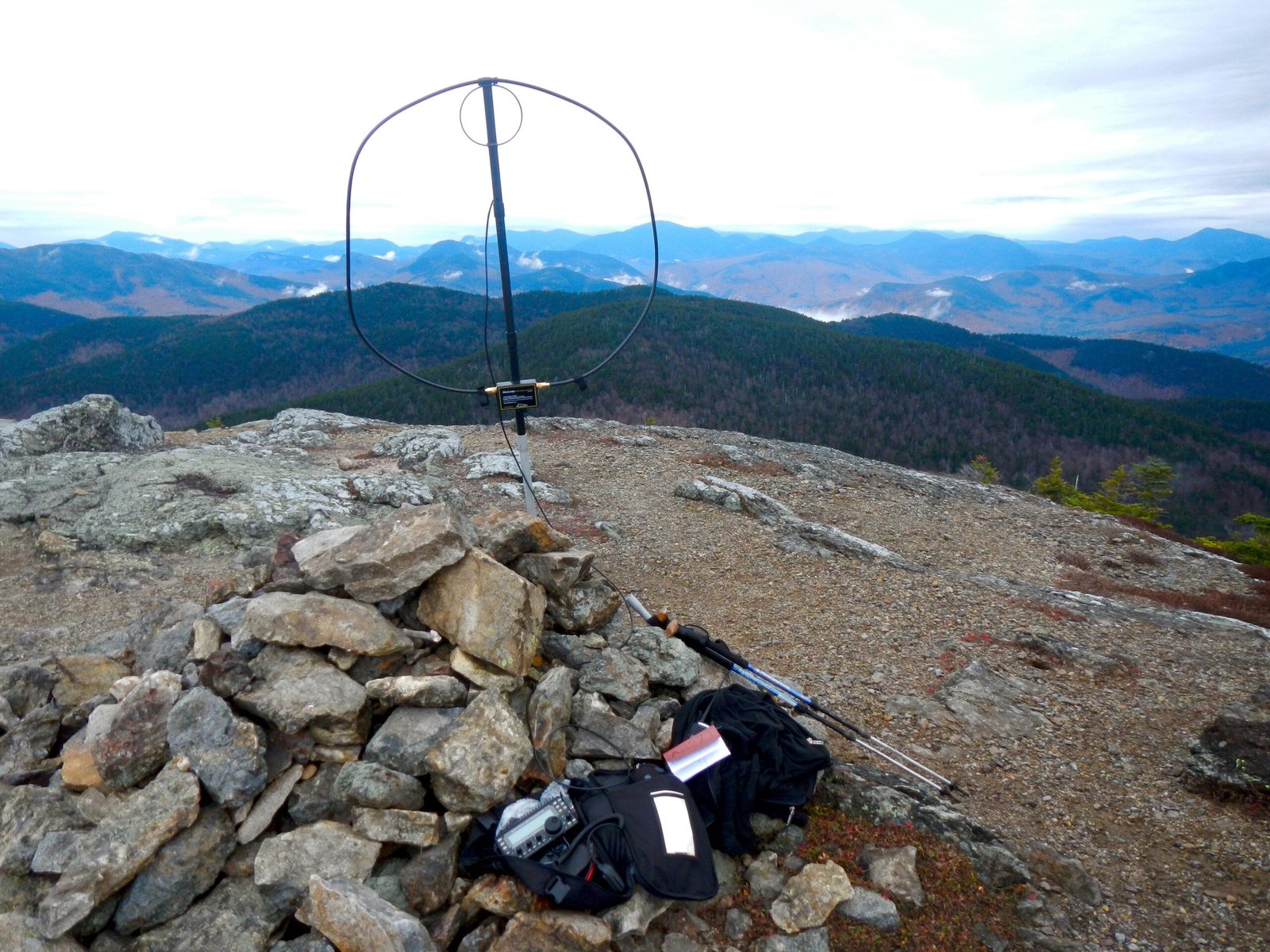
Portable amateur radio station and loop antenna on a rocky summit overlooking mountain ridges
A portable amateur radio station and loop antenna on a rocky summit, Oct. 28, 2014. Photo: Kevin Morgan / Wikimedia Commons, CC0.

Summit Operators Prepare for November 7 Transatlantic HF Contacts

Posted on

October 20, 2026
Back to Radio in the News

Amateur radio operators in North America and Europe are preparing to make transatlantic HF contacts from mountaintops on Nov. 7, 2026, during the 19th Trans-Atlantic Summit-to-Summit event. The coordinated operating period gives portable stations on both sides of the ocean a shared window to find one another, with participants planning stations ranging from low-power CW equipment to 100-watt voice setups.

Organizer Gerald, G4OIG/G8CXK, confirmed the event on Oct. 14. The core operating period is 1200–1700 UTC on Saturday, Nov. 7: 7 a.m.–noon Eastern Standard Time and 4–9 a.m. Pacific Standard Time.

Transatlantic HF Contacts from Portable Stations

A summit-to-summit contact connects two operators transmitting from qualifying summits in the Summits on the Air program. Unlike a contact between a summit and a home station, both ends of the path rely on equipment brought to the operating site.

That makes the event a test of portable station capability as well as propagation. Operators must balance transmitter power, battery capacity and antenna performance against the weight they can carry. The five-hour window helps concentrate activity, but each station still needs a usable path across the Atlantic.

CW and Voice Stations Take Shape

Jared, N7MAW, plans to participate from Utah’s W7U association using CW, or Morse code, with a vertical antenna. His proposed equipment would provide 35 watts on 20 meters or 10 watts on other bands.

On the European side, Tom, M1TJM, reported plans for a 100-watt single-sideband station in England’s Lake District, using a quarter-wave vertical antenna. The plans illustrate different approaches to the same task: Establishing an ocean-crossing contact with a station that can be set up on a summit.

In a further participant update, Mike, WB2FUV, said he intended to use 8–10 watts. He also reminded operators to listen for North American stations calling “s2s,” alongside the “/p” portable identifiers commonly heard from European participants.

Autumn Event Follows a Poor Spring Showing

G4OIG said the April event produced only one transatlantic summit-to-summit contact, as far as he could establish. He described November events as historically more productive and said he was considering proposing a single annual event in early November.

That remains a proposal rather than an announced change to the schedule. For Nov. 7, the immediate goal is transatlantic HF contacts between portable summit stations operating during the same five-hour window. Weather, summit access and HF propagation will determine which planned stations operate and which paths support contacts.

Sources and Further Reading

  • G4OIG and Participants: 2026 Event Announcement and Updates
  • Summits on the Air
  • SOTA Participants: Previous Autumn Event Preparations
  • M1TJM: Lake District Voice Station Plans
  • WB2FUV: Low-Power Plans and Summit-to-Summit Calls
Back to Radio in the News

Share This Article

If you found this article helpful, share it with fellow amateur radio operators. Spread knowledge.

FacebookLinkedInXRedditEmail
Enable JavaScript to View Clocks.

[ RF PREP ]

Free Ham Study

Only the Right Answer.
Clear explanations.

TechnicianGeneralExtra

Start studying

Free. No account required.

rail incident explorer RailIncident Explore rail incidents near you. Find train accident and derailment records. Explore railroad crossings across the U.S. on an interactive map. Explore the map ↗ railincident.com

W6HS.net

Get new article alerts.

Sign up now!

Notify me

Your voice in Washington needs you now more than ever.

ARRL — The National Association for Amateur Radio Join Now!

Support the ARRL. Join Now!

Proud Supporter:
Almaden Radio Club
West Valley Amateur Radio Assn.
San Francisco Radio Club

If you're in the San Jose area:
Join the ragchew! Thursday at 7 p.m.
On 2-meter at 146.520MHz.

Welcome to Hotel Sierra

This is a Google partner site.
How Google Uses Your Data

Amazon and the Amazon logo are trademarks of Amazon.com, Inc. or its affiliates.

This is a DX Engineering authorized affiliate website. Links to products at DX Engineering may result in a small commission for me at no extra cost to you.

This is an Amazon Associates affiliated website. Links to products Amazon may result in a commission for me at no extra cost to you.

For fast shipping to San Jose, I trust Ham Radio Outlet.

Copyright © 2026 W6HS.net
HF Propagation Outlook

Geomagnetic Activity to Remain Below Storm Levels

No geomagnetic storms expected through Sunday. Minor-to-moderate radio blackout chance: 20% today.

Forecast Details →

NOAA · Oct. 23 00:30 UTC

Radio in the News

WSJT-X Adds JTTY for Weak-Signal Keyboard Contacts

WSJT-X has added JTTY, a new digital mode that lets amateur radio operators exchange typed messages without the fixed transmit-and-receive periods used by FT8. Available in public test releases, it combines conversational and contest operation with error-correcting techniques intended to recover text more reliably than conventional radioteletype.

Summit Operators Prepare for November 7 Transatlantic HF Contacts

Amateur radio operators in North America and Europe are preparing to make transatlantic HF contacts from mountaintops on Nov. 7, 2026, during the 19th Trans-Atlantic Summit-to-Summit event. The coordinated operating period gives portable stations on both sides of the ocean a shared window to find one another, with participants planning stations ranging from low-power CW equipment to 100-watt voice setups.

Two ERMINAZ-2 Satellites Return Amateur-Band Signals After Early Deployment

Two ERMINAZ-2 amateur satellites returned their first received signals October 3 after an earlier-than-expected deployment caught their ground team unprepared, AMSAT-Deutschland reported October 5. Reception in Bochum, Germany, and elsewhere provided the first telemetry used to assess the spacecraft after release.