

FreeDV’s RADE Brings Digital Voice to Weak HF Signals
Back to NewsFreeDV’s Radio Autoencoder, or RADE, combines machine learning with digital signal processing to carry speech over HF, offering amateur radio operators an alternative to analog SSB during weak-signal conditions. The open-source mode runs through an SSB radio and computer, with published over-the-air comparisons showing how its reconstructed speech performs alongside conventional voice transmissions.
The FreeDV project now identifies RADE as its flagship mode. Its software is available for Windows, macOS, and Linux, and the underlying code is open for examination and experimentation.
Wide Audio in a Narrow Radio Signal
According to the RADE technical overview, version 1 transmits speech with an audio bandwidth of 8 kHz while occupying approximately 1.5 kHz of RF bandwidth. The wider audio figure describes the reconstructed speech; the narrower figure describes the radio signal carrying it.
The developers report operation at signal-to-noise ratios as low as −2 dB. Actual intelligibility depends on the channel and the receiver’s ability to acquire and maintain synchronization, as the project’s recordings illustrate.
RADE requires more processing power than earlier FreeDV modes. The developers list ordinary modern computers and the Raspberry Pi 4 or later as suitable platforms. The SM1000 and ezDV adapters cannot run it because they lack sufficient processor and memory resources. RADE V2 is currently in beta testing; the published 1.5 kHz specification applies to V1.
Published Tests Include Fading and Long-Distance Paths
A development test campaign conducted in August and September 2024 collected approximately 50 samples from a ten-person group. Recorded SSB and digital transmissions were sent consecutively at the same peak power, providing comparisons over approximately the same propagation conditions.
One published example covered a 13,680-kilometer path from Texas to New South Wales using 25 watts peak envelope power. The report gives a measured signal-to-noise ratio of 4 dB and includes a fade during which the digital receiver loses synchronization and then recovers.
The campaign also covered groundwave, near-vertical-incidence skywave, and international paths, with several languages represented. Developers reported encouraging results for most speakers, while noting difficulty with one tested voice and possible acquisition problems on some very long-distance channels. These are documented development results from 2024, rather than a new comparison conducted this year.
Conventional Radio Interfaces Support the Mode
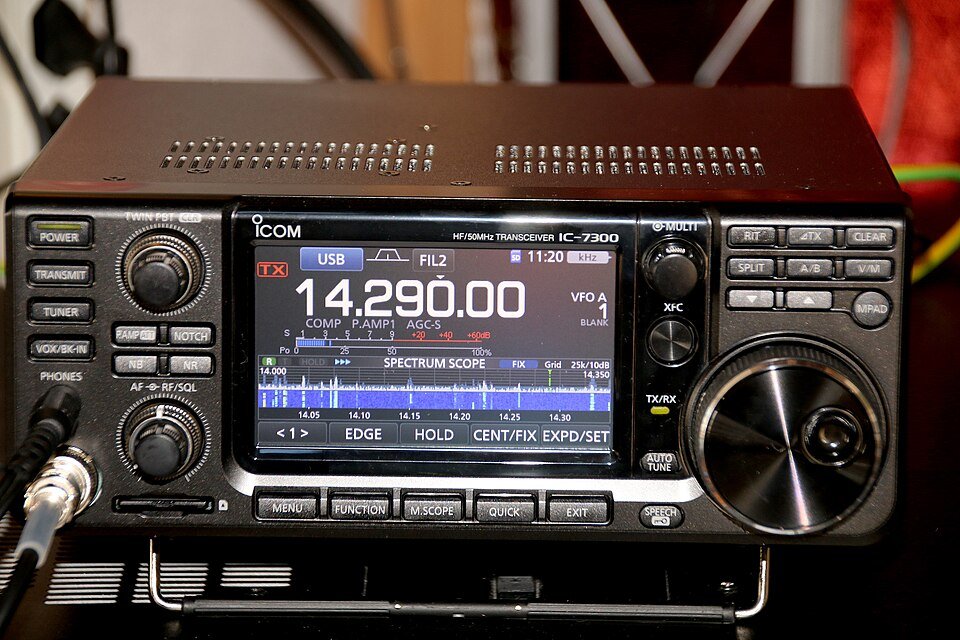
FreeDV’s setup documentation describes connections through a radio’s built-in USB audio interface or an external sound interface. A separate audio device handles the operator’s microphone and decoded speech. Receive-only operation is supported.
Transmitter adjustment remains important. The guide warns that excessive audio drive distorts the transmitted signal and reduces reception quality. It also calls for a clean audio path, with speech compression disabled on transmit and noise reduction disabled on receive. Sustained output must remain within the transmitter’s capabilities.
The project’s FreeDV Reporter service helps operators find activity and coordinate contacts. Combined with the published comparison recordings and openly available software, it provides a practical route for amateur stations to evaluate digital voice under their own HF conditions.